Showing posts with label rosé. Show all posts

Sunday, May 22, 2011

Summer's here, so break out the pizza and beer! (Pt. 1)


Hey foodies! Testing the Water is back online after a rough conclusion to my first year in grad school. I'm currently back in Richmond, VA unwinding with the pizza party. We've been brushing off our pizza making skills by welcoming some new cooks into the circle, testing out some different preparation methods (ex. lower hydration ratio in the dough- but more on that in a later post), and some experimental toppings (we're hiding these pictures in the vault next to Operation Bin Laden for now). The weather is gorgeous, the beer is cold, the pizza is hot, and the company is incomparable. I'll let the pictures do the talking.


Belgium blonde ale: flavors of citrus, cream, and alcohol.


White pizza: garlic, olive oil, basil, mozz.


A last minute squeeze of lemon brings it all together.
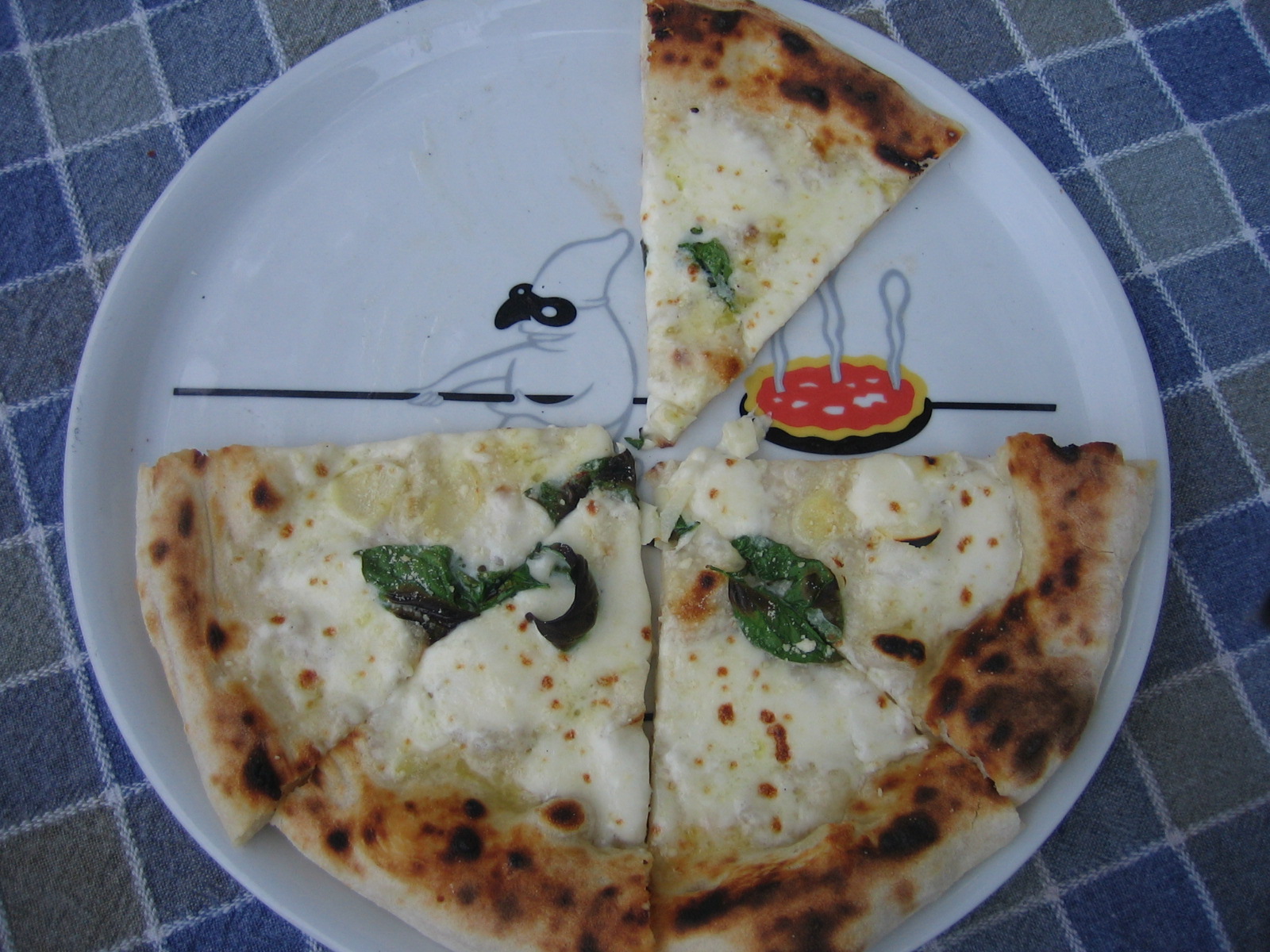


Very nice garlicky flavor. By far, the best tasting pizza of the night.


Skipped out on the Bell's Oberon mini-keg this summer, which was the beer (un)official beer of summer 2010. A couple of us have tasted this season's Oberon and it just seems to lack flavor. Anyone else know what I'm talking about?

Southern Tier's pale ale sampler pack includes their pale ale, IPA, Phinn and Matts (slightly dark pale ale), and 422 (wheat pale ale). All of them are sure to please a hops fan. We look forward to drinking these during hot summer nights.


The infrared thermometer is reading about 950 right above the stone. With the broiler on, it maxed out at over 1100 degrees (F). Pizzas cook in under 3 minutes.

Needless to say, the pizzas featured in this blog are prepared by cooks that have been trained at the school of hard culinary knocks using kitchen appliances that are almost as old as we are. We don't recommend everyone try this at home, as a drop of sauce on your fru-fru glass window oven will cause it to shatter.


A pizza margherita with some crust that got a little too happy in the oven (but was still delicious).


"Green" dining.


The last pizza of the night was made with dough by a rising pizza chef. This feletti pizza (grape tomatoes, cheese, garlic, basil) is well paired with the first cold glass of rosé of the summer. What? Afraid to drink pink wine? This ain't the white zin your momma drinks at her book club meetings. Educate yourself.

Monday, July 26, 2010

Pizza Party + What's Wrong w/ Your Bread?

I've been spending a few weeks back home in Richmond, VA. My days here are rarer and rarer, which is unfortunate because my best friends still live in the city. But-- nothing brings us together like food, drink, and a good time. Last weekend, my buddy Nathan put on a fantastic, 6-pizza feast for us. This guy has spent the past 2-3 year perfecting his recipes, trying to get as close to the best, sans-woodfire grill/homemade pizza possible. For long time TtW followers, you will remember a long streak of posts (now archived on this blog) that I devoted on my experiments with homemade pizza. Well, you all can blame Nathan for that.

Anyways, what's Nathan's secret? Here are just a few things I've picked up from him (hopefully he doesn't mind!):
-For his sauce, he uses canned (Cento-brand) whole tomatoes that have been rinsed, seeded, then crushed
-He uses a sourdough "starter" made from imported yeast from some old mill, bakery, or something like that in Italy: this gives his crust a more developed, sourdough taste. This step isn't for everyone, but it's worth the investment if you make a lot of bread
-For cheese- water content matter: too dry and the cheese burns, but the balls packed in water just turn into goo unless they are wrapped in a paper towel for a little while in the fridge
-No olive oil in the dough mixture (it burns at high temps)
-Lean towards recipes that create more of a "wet" dough: this simply means a a higher proportion of water to flour

-Don't punch down the dough after it has proofed initially, contrary to a lot of common pizza dough recipes
-To get your oven and stone as hot as possible, preheat it to the max temperature for at least an hour before cooking
-Use the broiler setting when actually cooking the pizza, and if you can turn the broiler on independently of the bake setting then use both when cooking the pizza
-Rotate the pizza with your peel during the cooking process to ensure even cooking


The result is a thin crust pizza with just the right amount of dark, blisters on the bottom of the crust (a characteristic usually only found on pizza made in HOT wood-fired, brick ovens). The toppings are the time-tested compliments to the main star of this pizza: the crust! Speaking of- the crust has the taste and chewiness of a a good sourdough loaf, with plenty of airy bubbles. Yum! In addition to the traditional margharita-style, he also made a red pizza (no cheese), white pizza (no sauce) with and without garlic slices, and the crowd favorite- a white pizza that is topped with baby arugula and lemon juice after it comes out of the oven.

Just in case you were wondering- we had a mixture of drinks. I bought a French rosé from the Rhone Valley ($8 on sale) that I quickly grabbed and chilled at my neighborhood Kroger. This wine wasn't too bad: it had a slightly sweet strawberry initial taste on the tongue with a dry finish. I recommend the other rosé I have reviewed on the site. Go ahead- utilize the "search this blog" feature and type in "Tavel" or "rosé". My other buddy, James, also scored us a mini-keg of Bell's Oberon summer ale. I highly recommend the Oberon as a crowd-pleaser.

With the "itis" kicking in full force, Nathan showed me a few interesting links related to the topic of the night's featured, epicurean indulgence. The most interesting one was related to the health benefits of REAL sourdough bread. When I mean REAL, I mean the kind that takes hours to proof. This is in contrary to a lot of mass production bread that is churned out in a bunch of chain store bakeries or on the shelf in most major grocery stores. The easiest place to find the real stuff is in your own kitchen, where YOU made it. "Fast" bread may contribute to a lot of wheat intolerance in Americans because our bodies are incapable many parts of the wheat germ without the aid of yeast. The yeast break down the wheat and makes bread easier to digest and the by-product gives a better flavor to the bread. Anyways, the health benefits from slower bread are numerous beyond wheat intolerance, including possibly preventing diabetes. Like with red wine, I don't need a justification to consume homemade sourdough other than the fact that it tastes good- BUT it's nice to know you can enjoy a fine homemade pizza like Nathan's without a side of guilt. Right?

Read about the health benefits of sourdough for yourself

Saturday, June 13, 2009

pork au poivre


Today, I am making a pork spin-off of a traditional French dish: steak au poivre (pepper steak). True steak au poivre is a staple of French bistros, and involves a thick-cut NY strip steak or a filet mignon heavily seasoned in coarse ground pepper with a creamy cognac sauce. I was watching Anthony Bourdain's "No Reservations" feature his restaurants, the Les Halles bistro in NYC. My version uses a bone-in pork chop because they are cheap and are basically a culinary blank palette- you can do almost anything with it. The result is a blend of flavors: the saltiness and black-pepper heat from the pork chops balance the fruity and slightly sweet cream sauce. 


Like a t-bone, this cut of pork chop offers a great blend of really tender and really tasty parts of the pig. Notice a good amount of fat along the side- this adds flavor and keeps the pork moist

In all honesty, I bought my chops as part of a sale-priced value pack so they aren't cut super thick like the type of meat usually used for steak au poivre. That's ok for me because you have to cook pork all the way through, unlike steak. You can use thick cut pork chops, but just make sure its cooked completely. Anywho- on to the recipe!

Pork au poivre with roasted garlic potatoes

Ingredients:
For the potatoes:
  • 2 medium Potatoes, your favorite variety, cubed (rinsed and/or scrubbed, skins on)
  • 4 garlic cloves (papery wrapper still on, trust me)
  • Extra virgin olive oil
  • Coarse sea salt or kosher salt
  • Coarse ground black pepper
  • Fresh thyme, rosemary (optional)
For the pork and pan sauce:
  • Pork chops, one per person
  • Olive oil
  • Coarse ground black pepper
  • Kosher salt
  • Shallots or onions, diced (I used red onions, but you can use yellow or white but probably not Vidalia)
  • Heavy cream
  • Cognac (if you aren't a frequent sipper of the "yac" then you can get a few of those mini-bottles from the liquor store)

I used a bottle of Remy Martin VSOP that we had around the house

Directions
  • Prepare the potatoes in advance by tossing the garlic cloves and cubed potatoes in olive oil in a large piece of aluminum foil (If the potatoes aren't coated, they will stick to the foil). Leaving the garlic in the paper helps them to roast and develop a really nice sweetness (and you can easily peel the paper off when its cooked). 

The pouch- before cooking
  • Season the garlic and potatoes with salt and pepper.
  • Toss in your favorite fresh herb if you want. This part is just another slight flavor enhancer. The real star of this dish is the pork.
  • Fold the foil to make a pouch for the potatoes to steam in and bake the pouch around 400 degrees until the potatoes have softened all the way through. If you want, you can just roast them on the foil, not in a pouch, at a lower temperature. This will give you a drier, crispier potato with more caramelization. It's your choice.

The pouch after cooking


Roasted garlic - that dark brown color is what you should be shooting for
  • Sauté the onions or shallots in a pan with olive oil and a little salt n pepa on medium heat until they get soft and semi-translucent.
  • Season the pork chops with salt and lots of pepper (see the picture).
  • Cook the pork chops on another pan on medium high for 3-4 minutes per side or until golden brown. If you chose the thick cut pork chops, I would leave them on the counter for 20mins to warm up to room temp a little before cooking them and/or finish the seared chops in a warm oven for a few minutes to make sure they are done.
  • Turn the heat off the chops when they are done, leave them in the pan.
  • Pour a healthy double shot of cognac into the pan with the onions and stir. Let the alcohol cook off for a few seconds.
  • Add a little pour of heavy cream into the cognac and onions. The color you are looking for is a light brown (see the picture). 
  • Stir and adjust any seasoning (salt and/or pepper). 
At this point you can either toss the pork chops into the pan with the sauce or you can pour the sauce directly on the chops. Garnish your prized pork with some of those roasted garlic-fragrant potatoes. 


A note on drinks - Rosé:
My drinking preferences change with the seasons. In the summer, I enjoy a little dry, chilled rosé. Yeah it's pink, so what? Europeans drink rosé throughout the summer. This stuff isn't sweet like Franzia or André blush. It has subtle flavors that range from cherry and strawberry to pomegranate. It's crisp, clean, and got a little more body than a sauvignon blanc or pinot grigio and can hold up to meatier dishes.

Sol Angélys - Tavel, France

To pare with my French-inspired pork au poivre, I am drinking a rosé from Tavel, France- one of the most famous cities for making rosé. I snagged this bottle after a recommendation from my local wine store proprietor for $12. Any guys who feel emasculated by drinking a pink wine can do a few pushups after dinner while watching the Spike channel.